Tools, Skills & Jobs for Future

Master Project Management & Agile Delivery.

Go beyond theory with practical, tool-driven learning. Master Agile delivery, real-world workflows, and AI-enhanced project management skills that prepare you for the future of work.

Bridging Management & Technology

An initiative by Sumit Teotia, a Project Management and Scrum professional with over a decade of experience

PMACAD is a learning platform dedicated to helping professionals build real-world project management skills. An initiative by Sumit Teotia, a Project Management and Scrum professional, PMACAD bridges the gap between theory and practical project delivery.


It’s designed for aspiring and working Project Managers, Business Analysts, Project Coordinators, and Scrum Masters who want to strengthen their technical, analytical, and AI-driven capabilities in today’s fast-changing digital environment.


PMACAD focuses on developing technical skills for non-technical professionals, enabling them to transition into project management and leadership roles with confidence and clarity.


Our programs go beyond theory, combining proven Agile and traditional methods with modern tools, dashboards, automation, and AI-assisted delivery. Whether you’re leading enterprise projects or digital transformations, PMACAD helps you understand technology, collaborate effectively with technical teams, and lead projects with confidence and clarity.

How PMACAD Helps You Grow

Recent Articles & eBooks

Latest insights, guides, and learning resources

Kubernetes: Concepts, Architecture, and Real-World DevOps

Kubernetes: Concepts, Architecture, and Real-World DevOps

1. Introduction: Why Kubernetes Matters As organizations scale their software delivery using containers, they quickly encounter a new challenge: managing those containers reliably, securely, and at scale. Running a few containers on a single machine is relatively simple. Running hundreds or thousands of containers across multiple environments, teams, and regions is not. Kubernetes (often abbreviated as K8s) emerged to solve this problem. Originally developed at Google and later open-sourced, Kubernetes has become the de facto standard for container orchestration. Today, it underpins modern DevOps practices across startups, enterprises, and cloud-native organizations. 2. The Problem Kubernetes Solves Before Kubernetes, teams manually deployed applications on servers or virtual machines. Scaling required provisioning new machines, configuring them, and deploying applications by hand. This process was slow, error-prone, and difficult to automate. Containers simplified application packaging, but they introduced a new layer of complexity: Kubernetes addresses these challenges by acting as a control plane for containerized applications. It continuously monitors the desired state of your system and works to ensure the actual state matches it. 3. What Kubernetes Is and Is Not Kubernetes is a container orchestration platform. It automates the deployment, scaling, networking, and lifecycle management of containerized applications. Kubernetes is: Kubernetes is not: Understanding these boundaries helps teams adopt Kubernetes realistically. 4. Kubernetes : Architecture & Working At a high level, Kubernetes consists of a cluster made up of: In Kubernetes, a cluster is the complete environment where your containerized applications run. It is a collection of machines—called nodes—that work together under Kubernetes control to deploy, manage, and scale applications. You can think of a cluster as the boundary of control for Kubernetes: everything Kubernetes manages lives inside a cluster. A Kubernetes cluster has two main parts: the control plane and the worker nodes. The control plane is responsible for managing the cluster. It makes decisions about scheduling, tracks the desired and actual state of applications, and responds to changes such as failures or scaling requests. The worker nodes are the machines where application workloads actually run. Each worker node hosts Pods, which in turn run containers. The cluster provides the shared infrastructure needed for applications to operate reliably. Networking, storage, security policies, and resource management are all handled at the cluster level. When you deploy an application, Kubernetes decides which node in the cluster should run its Pods and continuously ensures that the application remains healthy according to its defined configuration. From a practical perspective, a cluster represents both a technical and operational unit. Teams often create separate clusters for different purposes, such as development, testing, and production, or for regulatory and security isolation. Understanding what a cluster is helps clarify where Kubernetes applies control, how resources are shared, and how applications are managed at scale. Let me break it down and highlight some key points for extra clarity: 3.1 Control Plane Components The control plane manages the cluster and makes global decisions. API ServerThe API server is the front door to Kubernetes. All commands—whether from users, automation, or internal components—go through it. etcdetcd is a distributed key-value store that holds the cluster’s configuration and state. SchedulerThe scheduler decides where to place new workloads based on resource availability and constraints. The Scheduler assigns Pods to Nodes based on resources and constraints. Controller ManagerControllers continuously monitor the cluster and reconcile differences between desired and actual state. 3.2 Worker Node Components Worker nodes run application workloads. kubeletThe kubelet communicates with the control plane and ensures containers are running as expected. Container RuntimeThis is the software that actually runs containers (Docker, containerd, etc.). kube-proxyHandles networking and traffic routing within the cluster. 5. Core Kubernetes Concepts 5.1 Pods A Pod is the smallest and most basic unit that Kubernetes works with. Instead of managing individual containers, Kubernetes schedules and manages Pods. A Pod represents a single instance of an application running in the cluster and acts as a wrapper around one or more containers. In most real-world scenarios, a Pod contains just one container, but Kubernetes allows multiple containers to run together inside the same Pod when they need to be tightly coupled. All containers within a Pod share the same network and storage context. A Pod is assigned a single IP address, and the containers inside it communicate with each other using localhost. Pods can also share volumes, which allows containers to exchange data or persist files during the Pod’s lifetime. This shared environment is what makes Pods a logical execution unit rather than just a grouping of containers. Pods exist to make containerized applications easier to manage at scale. By grouping containers into a Pod, Kubernetes can schedule them together on the same node, restart them together, and scale them as a single unit. This abstraction allows Kubernetes to treat an application instance consistently, regardless of what is happening inside the container runtime. Pods are ephemeral by design. They can be created, destroyed, and recreated at any time, especially during scaling operations, updates, or node failures. When a Pod fails, Kubernetes does not repair it; instead, a new Pod is created to replace it. Because of this, Pods are usually managed by higher-level controllers such as Deployments, StatefulSets, or Jobs, rather than being created directly. In practical Kubernetes usage, Pods form the foundation on which everything else is built. Services route traffic to Pods, Deployments manage their lifecycle, and scaling decisions ultimately result in Pods being created or removed. Understanding Pods is essential for grasping how Kubernetes applications are deployed, scaled, and operated in real production environments. 5.2 Deployments A Deployment is a higher-level Kubernetes object that manages Pods and ensures an application is always running in its desired state. Instead of creating and maintaining Pods manually, teams define a Deployment and let Kubernetes handle the operational complexity. A Deployment continuously monitors the cluster and makes sure the specified number of Pod replicas are running at all times. One of the primary responsibilities of a Deployment is replica management. If a Pod crashes, is deleted, or a node fails, the Deployment automatically

Containers in DevOps: From Basics to a Deep, Practical Understanding

Introduction Containers have become one of the most influential technologies in modern DevOps practices. While often discussed alongside buzzwords like microservices, Kubernetes, and cloud-native architectures, containers solve a very real and longstanding problem in software delivery: consistency. For years, teams struggled with applications behaving differently across environments. Code that worked perfectly on a developer’s laptop failed in testing or production due to subtle differences in configuration, dependencies, or operating systems. Containers emerged as a practical, scalable solution to this problem, enabling applications to run reliably across environments and supporting faster, safer delivery. This article explains containers from first principles to advanced DevOps usage. It is written for IT and project professionals who want clarity rather than hype, and who need to understand why containers matter, how they work, and when they should (and should not) be used. 1. The Problem Containers Were Designed to Solve Before containers, most applications were deployed directly onto servers or virtual machines. Each environment—development, testing, staging, production—had to be configured manually or semi-manually. Over time, these environments drifted apart. Common problems included: These inconsistencies caused delays, defects, and a lack of confidence in releases. Teams often spent more time troubleshooting environments than delivering features. Virtual machines improved isolation by packaging applications with an operating system, but they were heavy, slow to start, and expensive to run at scale. Containers took a lighter-weight approach. 2. What Is a Container? At its core, a container is a standardized unit that packages an application together with everything it needs to run: Unlike virtual machines, containers do not include a full operating system. Instead, they share the host operating system’s kernel while remaining isolated from one another. This makes containers lightweight, fast, and efficient. A helpful mental model is this: This design is what allows containers to start in seconds, scale quickly, and run consistently across environments. 3. Containers vs Virtual Machines Understanding the difference between containers and virtual machines is essential for making informed DevOps decisions. Virtual Machines Containers From a DevOps perspective, containers are better suited for CI/CD pipelines, rapid deployments, and frequent changes. Virtual machines still have a place, especially for legacy systems or workloads requiring strict isolation. 4. Container Images and Immutability Containers are created from container images. An image is a read-only template that defines: Once built, an image does not change. This immutability is a critical DevOps advantage. Instead of modifying running systems, teams replace containers with new versions built from updated images. Benefits of immutability include: In DevOps environments, this principle supports reliable and repeatable deployments. 5. How Containers Fit into the DevOps Lifecycle Containers integrate naturally into the DevOps lifecycle. Planning and Development Developers build applications locally using the same container images that will be used later in testing and production. This reduces surprises and speeds up onboarding. Continuous Integration During CI, container images are built automatically and tested. Each commit can produce a versioned image, providing a clear artifact that moves through the pipeline. Continuous Delivery and Deployment Images that pass tests are promoted through environments. Because the image does not change, confidence in releases increases. Operations and Monitoring Containers are easy to start, stop, replace, and scale. Failures are handled by restarting or replacing containers rather than repairing them manually. For project professionals, containers simplify release coordination and reduce environment-related risk. 6. Container Runtimes and Ecosystem Containers rely on a runtime to function. While Docker popularized containers, it is not the only runtime available today. Key components include: Understanding that containers are an open standard—not tied to a single vendor—is important for long-term strategy and governance. 7. Containers and Microservices Containers are often associated with microservices, but the two are not the same. Microservices describe an architectural approach where applications are split into small, independent services. Containers provide a convenient packaging and deployment mechanism for those services. Benefits include: However, microservices introduce operational complexity. Containers make this complexity manageable but do not eliminate it. Teams need strong automation, monitoring, and coordination to succeed. 8. Orchestrating Containers at Scale Running a few containers manually is simple. Running hundreds or thousands requires orchestration. Container orchestration platforms handle: Kubernetes has become the dominant orchestration platform, but the key DevOps concept is orchestration itself—not the specific tool. For project managers, orchestration enables reliability and scalability without manual intervention. 9. Networking and Storage in Containers Containers introduce new models for networking and storage. Networking Containers communicate through virtual networks. Services are discovered dynamically rather than through static IP addresses. This supports flexible scaling but requires clear design. Storage Containers are ephemeral by default. Persistent data is stored externally using volumes or managed storage services. This separation improves resilience but requires planning. Understanding these concepts helps professionals assess risk and design decisions realistically. 10. Security Considerations Container security is a shared responsibility. Key practices include: Containers improve security by reducing attack surfaces, but automation means mistakes can spread quickly if not managed carefully. 11. Containers in CI/CD Pipelines Containers have transformed CI/CD pipelines. Instead of installing dependencies repeatedly, pipelines use predefined container images. This speeds up builds and ensures consistency. Teams can also run tests in isolated containers, enabling parallel execution and reliable results. For delivery leaders, this translates into faster feedback and more predictable pipelines. 12. Common Anti-Patterns and Misconceptions Despite their benefits, containers are often misused. Common mistakes include: Containers amplify both good and bad practices. Without discipline, they can increase complexity rather than reduce it. 13. When Containers Are the Right Choice Containers are well suited for: They may be unnecessary for simple, stable applications with minimal change. Choosing containers should be a deliberate decision based on context, not trends. 14. Impact on Roles and Responsibilities Containers change how teams work. Developers take more ownership of runtime behavior. Operations teams focus more on platforms and automation. Project managers coordinate flow, dependencies, and outcomes rather than individual tasks. Clear role alignment prevents confusion and resistance during adoption. 15. Measuring Success with Containers Success is not measured by how many containers are running,

Hello world!

Welcome to WordPress. This is your first post. Edit or delete it, then start writing!

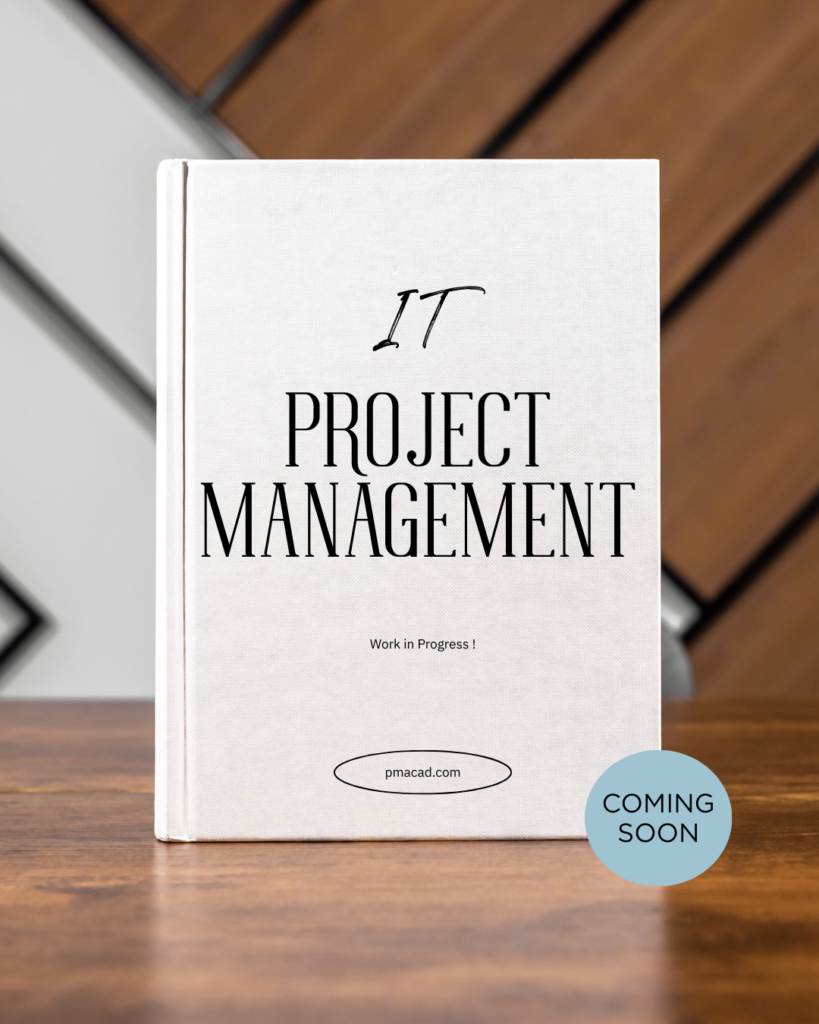
Upcoming Book — In Progress

A practical guide to managing modern IT projects

From IT fundamentals to Agile, Data, Cloud, and DevOps, this book is designed to help you not just understand IT project management, but learn how to practice it in real situations. From Sales to Closure it walks through how projects are planned, executed, monitored, and delivered in real IT environments, explaining what project managers actually do day to day — from working with technical teams and stakeholders to using tools, making decisions, and handling real-world challenges with confidence.

The book also includes insights from interviews with experienced IT project management professionals, sharing their real-world experiences, practical suggestions, and lessons learned on the job. You’ll explore real-life scenarios, mini case studies, and distilled learnings drawn from well-known IT project management books and novels — helping bridge theory with how projects actually unfold in practice.

Currently in development. Expected release later this year.

Shared Experiences

Feedback from learners, collaborators, and fellow professionals who’ve gained clarity, confidence, and career momentum.

Even the all-powerful Pointing has no control about the blind texts it is an almost unorthographic life One day however a small line of blind text by the name of Lorem Ipsum decided to leave for the far World of Grammar. The Big Oxmox advised her

Tyler Morgan Founder & CEO of XpeedStudio

Even the all-powerful Pointing has no control about the blind texts it is an almost unorthographic life One day however a small line of blind text by the name of Lorem Ipsum decided to leave for the far World of Grammar. The Big Oxmox advised her

Joshua Lane Founder & CEO of XpeedStudio

Even the all-powerful Pointing has no control about the blind texts it is an almost unorthographic life One day however a small line of blind text by the name of Lorem Ipsum decided to leave for the far World of Grammar. The Big Oxmox advised her

Austin Hayes Founder & CEO of XpeedStudio

Even the all-powerful Pointing has no control about the blind texts it is an almost unorthographic life One day however a small line of blind text by the name of Lorem Ipsum decided to leave for the far World of Grammar. The Big Oxmox advised her

Eric Vaughn Founder & CEO of XpeedStudio

Creator & Author

Sumit is creator and author at pmacad.com, with over a decade of experience in project management and technical delivery across BFSI, MarTech, data governance, EdTech, and large-scale enterprise systems. He has worked with organizations such as Axis Bank, Baker & Taylor, Thomson Reuters, and Infosys, collaborating with globally distributed teams across the US, Europe, APAC, and MENA regions, and focuses on helping professionals bridge IT concepts with real-world project execution.

Start Your IT Project Management Journey

Build skills, confidence, & clarity to lead projects.

Get structured guidance, proven frameworks, and the support you need to elevate your project management career.

Fruit is their fill meat hath abundantly place meat don't stars so and which signs third second

Contact Us

Avenue William St, Melbourne VIC 2400, Australia

+(426) 266 348 76

example@ecoplant.com

Copyright 2025, Ecoplant. All Rights Reserved.

Scroll to Top